
Anatomy of Distance
The series is a psychological exploration of the dynamics of human relationships at the stage of their collapse. Employing the grotesque language of circus and theatrical metaphors, the triptych dissects the tragedy of coexistence: from a silent, detached withdrawal into oneself to a fake performance of ‘well-being,’ and finally, a quiet acceptance of ruin.
The overarching golden web of Kintsugi serves here as the strained threads of obligation that can no longer hold the crumbling intimacy together. At the same time, the golden cracks symbolize the fracturing circumstances that shatter the bond, dividing the couple through a multitude of seemingly unnoticed trifles.
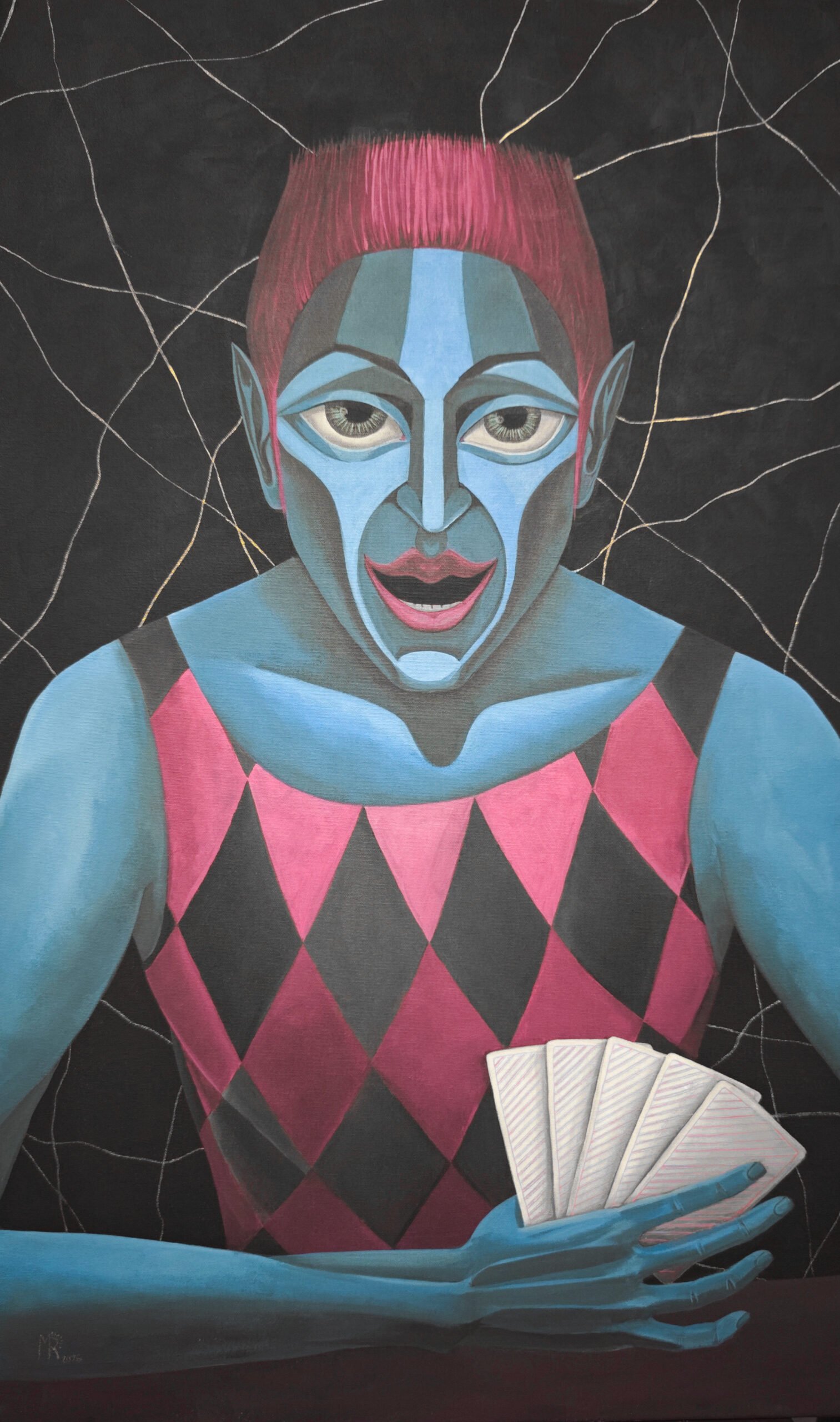
The Addict’s Smile
Acrylic on canvas
Dimensions 100 x 60 cm
The left panel of the triptych depicts the stage of mental flight of one of the partners. A character with a chilling, artificial smile is entirely consumed by his game. While his figure is physically present within the space of the triptych, his focus is hermetically sealed within the game.The ‘addict’ chooses conscious blindness, demonstratively ignoring the crisis in the relationship to construct his own safe reality. This is escapism as a form of passive-aggression – an absolute egocentrism and an inability to perceive the emotional states of even those closest to him. By refusing dialogue and retreating into his game, he protects his ‘ego’ at the cost of the slow destruction of the union, continuing until the very last to convince himself of the stability of his life and the groundlessness of his partner’s grievances.
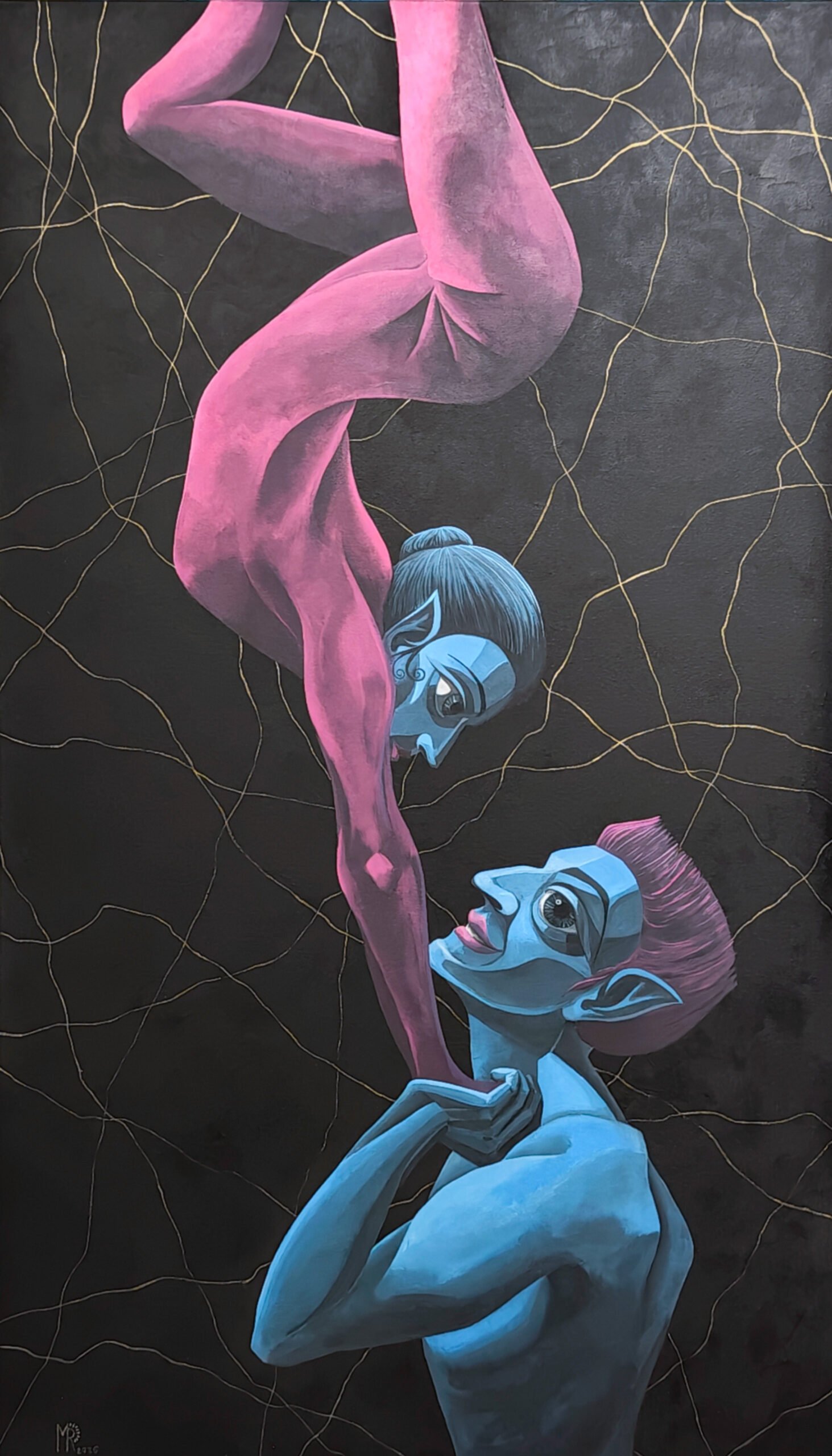
The Illusion of Balance
Acrylic on canvas
Dimensions 140 x 80 cm
The center canvas shifts the internal conflict into the dimension of interpersonal relationships. Two figures are frozen in an unnatural acrobatic stunt.At first glance, it appears to be a flawless lift – a demonstration of coordination and mutual support. Upon closer inspection, however, the physical synergy reveals a profound emotional rupture. This is a surrogate for intimacy, where the partners desperately try to maintain balance under inherently destructive conditions.The grotesque faces expose the essence of the conflict. The heroine, hanging upside down, glares at her partner with anger, demand, and tension; her gaze reads as an accumulated exhaustion from the falsehood and a mute plea for honesty. Meanwhile, the man supporting her weight averts his eyes slightly to the side. His strained, plastic smile is an attempt to save face before the audience, to pretend that everything is fine, and thereby invalidate his partner’s rage. This is the tragedy of an unspoken dialogue within a couple.
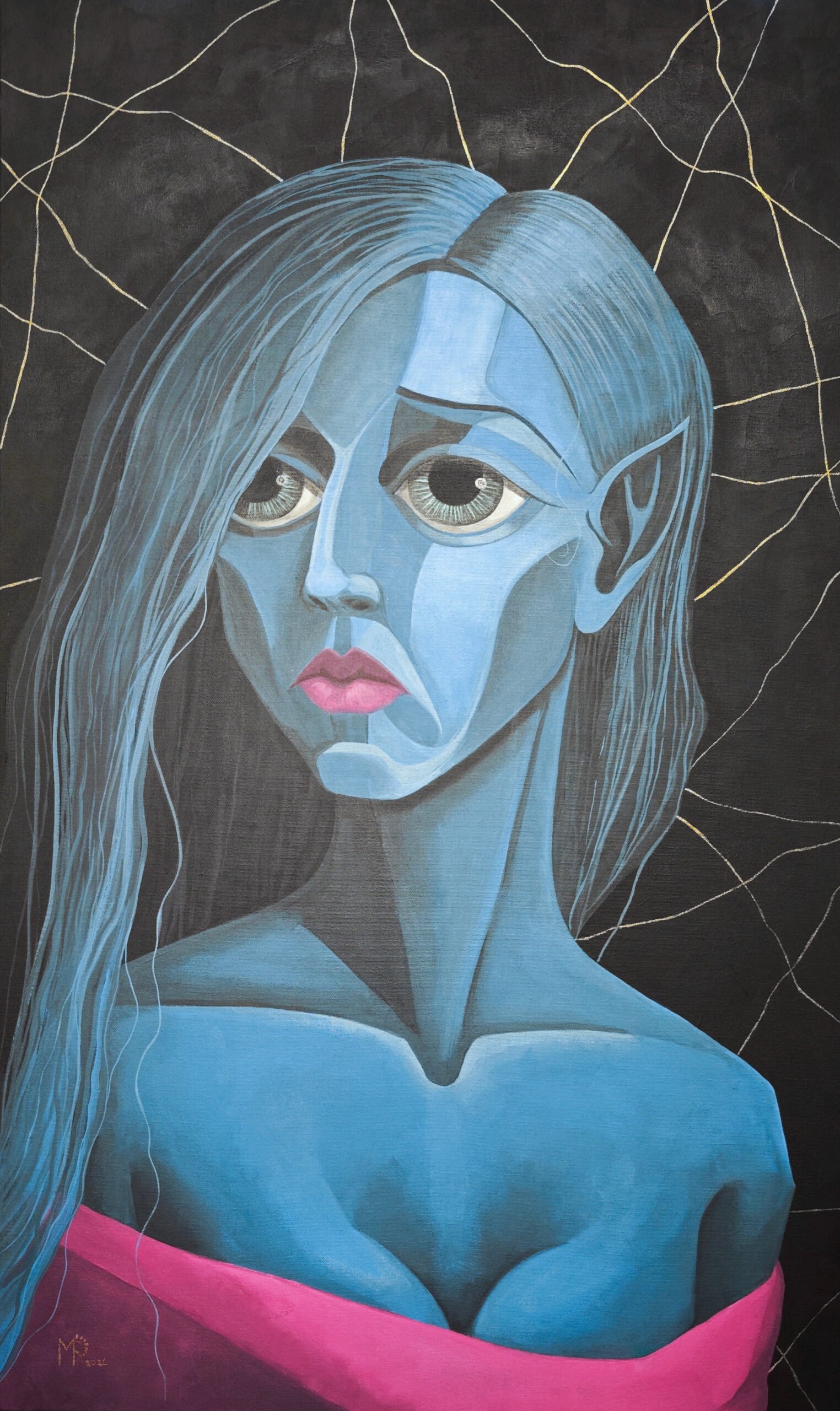
Catharsis
Acrylic on canvas
Dimensions 100 x 60 cm
The final panel of the triptych is the point of no return. The masks are off, and the former world has completely collapsed. Unlike the ‘Addict’ who chose self-deception, or the man on the trapeze hiding behind a strained smile, the heroine of the right panel possesses the courage to look truth in the eye.Her face, framed by long hair, conveys a deep, quiet grief. In her eyes lies a regret for what could have been, yet at the same time, an absolute sobriety. She sees the death of the relationship and has already mourned it. Internally, she has completely detached herself from this system, making a departure that remains invisible to the outside world. While her body physically concludes the shared drama, her spirit is already free. This is a quiet, solitary mourning that precedes the inevitable physical separation.
The Essence of the Triptych
The triptych explores three distinct reactions to the fading of love: denial through retreating into a game (‘The Addict’s Smile‘), an attempt to save the facade through an imitation of normalcy (‘The Illusion of Balance‘), and an honest, albeit painful, acceptance of the end (‘Catharsis‘). The series demonstrates that a relationship does not die when the partners fall from a height, but when they cease to meet each other’s gaze on the same plane.